A Comfortable Number
Nobody did anything wrong.
1% - low confidence. Probably high. Insufficient data. Revisit in six months.
Dave Jones is very good at his job.
He integrates AI systems for a health claims company outside Charlotte, and over two years he makes a finance department redundant, replaces two hundred and ten document readers in Manila, and builds the eligibility layer three states will run on. Every one of those projects was requested by a colleague with a real problem. Every one was delivered well. Every one made things measurably better. Appeals that took seventy-one days take twelve. A woman gets her surgery in October instead of February. His mother-in-law’s cancer is caught a cycle early.
Nobody is laid off. Requisitions are simply not posted.
Somewhere in the second summer, stopped at a red light on the drive home, Dave works out where all of it goes. Not vaguely. He knows what the middle looks like, and roughly who it happens to first, and what it will look like from a kitchen window. It takes him the length of one traffic signal.
So he starts a file. He writes down a probability he can live with, and he tells nobody, because he has run the conversation a hundred times and every version of it ends with a reasonable man saying something that sounds like a movie.
Every few months he revises the number.
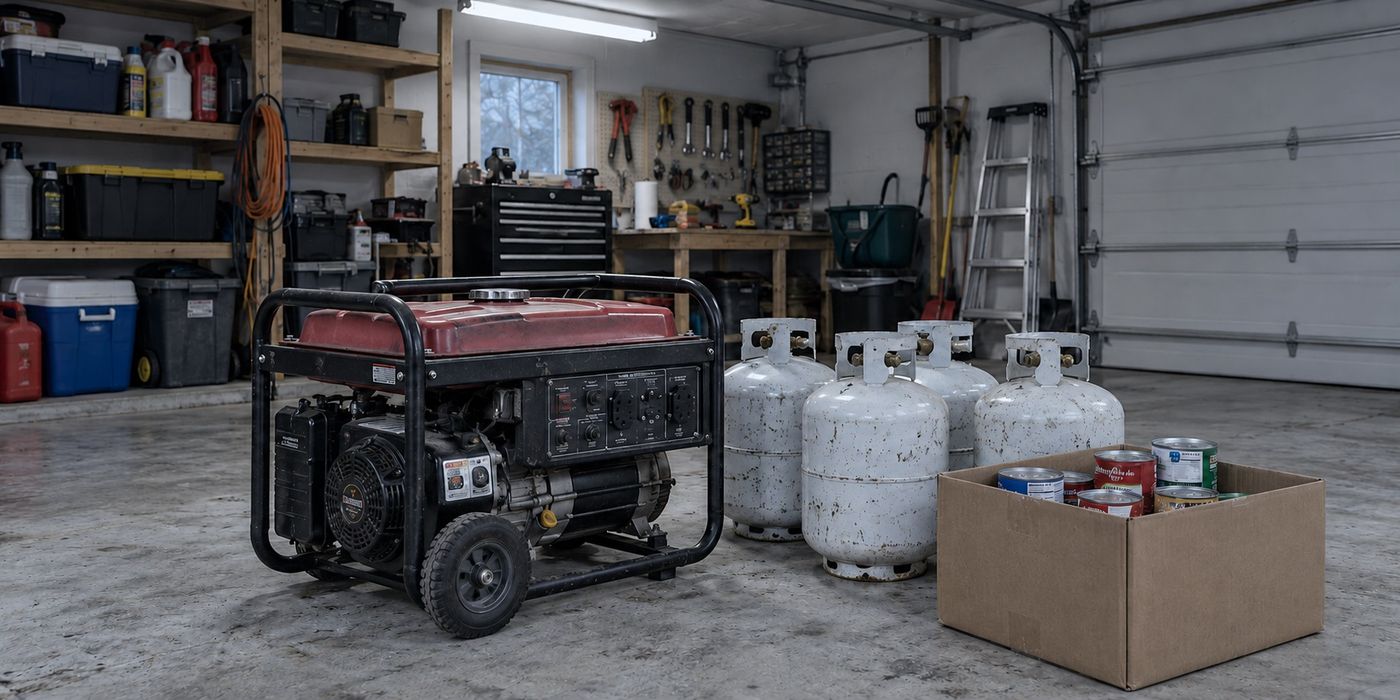
There is no villain here. There is no conspiracy. There is no rogue machine and no collapse - only procurement clauses, eligibility determinations, a change control board that votes itself out of a job in six minutes, and a generator running in an August garage.
There is not a single decision in it that a sensible person would reverse.
That is the problem, and Dave is the only one who can see it, and it does him no good at all.
Where to buy
Coming soon. Paperback and Kindle edition.
- Paperback - 278 pages
- Kindle edition
Read the first chapter
Chapter One - March
Two of them wouldn't move. That much was settled. He'd tested it twice in the last month and gotten the same answer both times, which meant it wasn't a mood. It was a position. You didn't argue a position, you routed around it.
Which left the split, and the split was ugly. The split meant paying more for less. The split meant a seam down the middle and everybody negotiating across it all night, and it meant half of the thing sitting there with nothing on it at all.
He liked meat on his pizza. He didn't think that was an unreasonable way to be.
"Dave."
Four faces on the far side of the table and two more in the little rectangles on the wall screen. Nolan had a spreadsheet up. The spreadsheet had been up for a while.
"Sorry. Say again."
"Column types." Nolan scrolled. "Fifty-one of them. We've got best guesses on most, but there's about a dozen where the source systems disagree with each other, and then there's the nine from the vendor feed that are just, honestly, they're free text with numbers in them sometimes."
"Which vendor."
"The third one. The regional."
"Right." Dave leaned back. The chair had a spot on the left arm where the finish had worn through. He'd had this chair twelve years. "Doesn't matter."
Nolan waited. "Which part."
"Any of it. Put them in as whatever's easiest to write. Char, int, float, doesn't matter, you can mix them in the same column if that's what the source gives you. Saber reads what's actually there. It doesn't care what we told it to expect."
"On all fifty-one."
"On all fifty-one. If the regional feed sends you a number one week and the word 'pending' the next week, that's fine, that's a real thing that happens and Saber will handle it. Don't spend two days building a cleaner for it."
Someone in one of the rectangles said, "What about the joins."
"Same answer." He was already thinking about the split again. Two cheese, one supreme, and then whoever ate the last slice of supreme was going to be a whole conversation. "It resolves them at read. You'll see it in the profiling. It's not fast, it's just not slow enough to matter."
Nolan looked at his spreadsheet for a second longer than he needed to, then closed it. Dave understood that. Nolan had been out of school five years and had never built a system that didn't have Saber underneath it, and he still had the instinct, which he'd gotten from somebody, that this was the part where you were careful. Five, six years ago that spreadsheet was three weeks of work, and getting it wrong meant you ate it for a decade. Bad types were the kind of mistake that outlived the people who made them. There were systems he'd worked on where you could still see somebody's Tuesday afternoon in 2004, permanent, load-bearing, wrong.
Now it was a shrug.
"Anything else on the migration?"
There wasn't.
He'd had the engineering group for six years. Thirty-five people now, on two floors of a building on the south side of Charlotte with a view of another building, and the title on the org chart said Director of Data Engineering, which meant in practice that when a thing didn't work it was his, and when it did it belonged to somebody who reported to him. That was a fair trade and he'd have taken it either way.
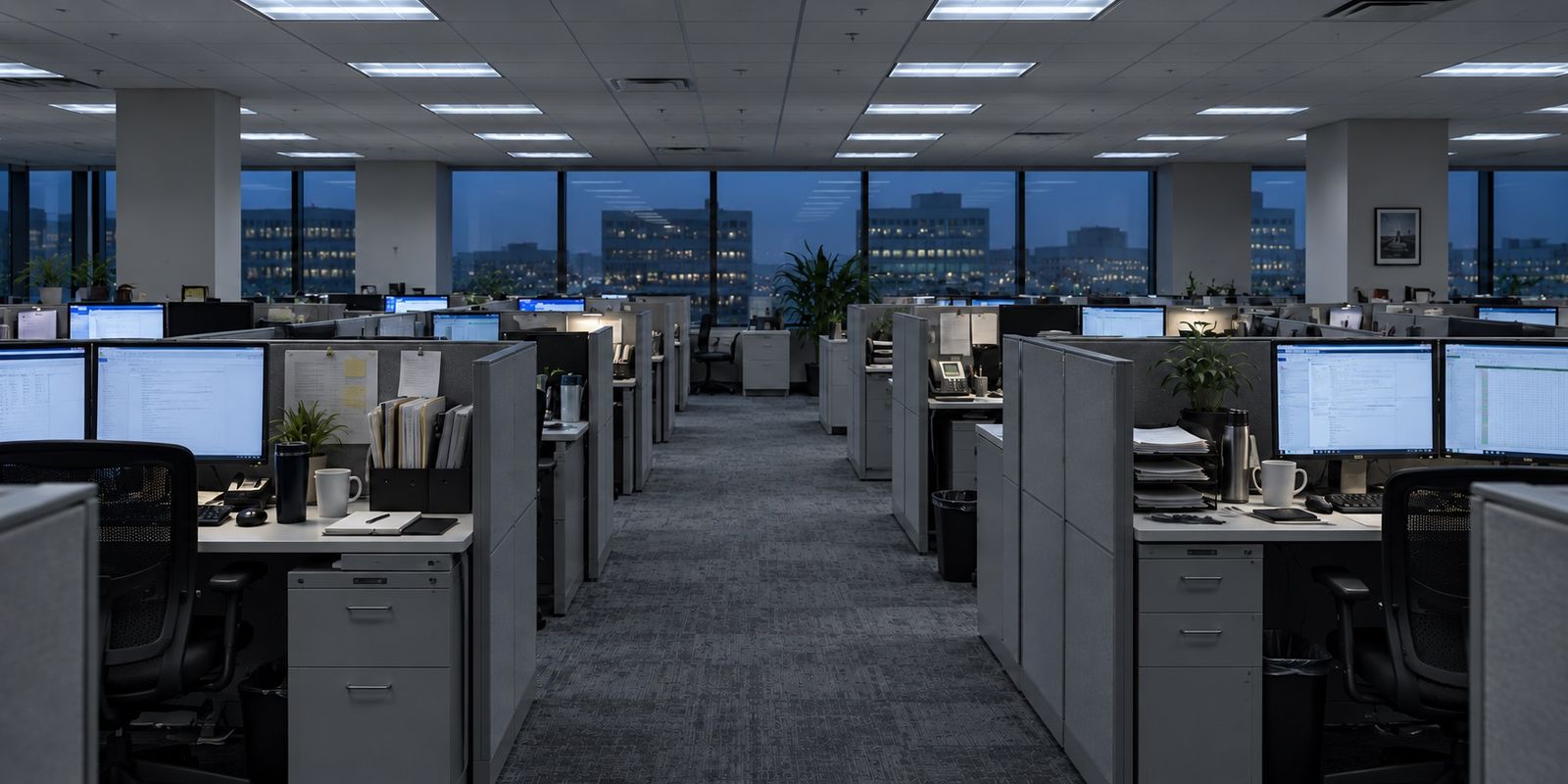
The fourth floor was a sea of cubicles. Six rows of them under ceiling tile and fluorescent, low walls, everything the same grey, with the conference rooms along the window side and about a dozen offices along the other. There had been a plan two years ago to knock the whole floor open and make it collaborative and it had gotten as far as a mock-up in a lobby and then it had not happened, and nobody had ever said why, and the mock-up had stayed in the lobby for eleven months.
Dave had an office because of the title. He kept the door open because the door being closed meant something in a room like that, and he did not want it to mean anything.
The meeting had been booked for an hour and they were out in nineteen minutes, which was normal now, and which meant he was back at his desk before ten thirty with nothing in front of him but the environment plan and forty minutes he hadn't accounted for.
Somebody could get two smalls. That was the thing nobody was proposing. Two smalls and one large, which was more money, but it ended the negotiation permanently and it meant he got an entire pizza that was his.
He wrote it down on the pad next to his monitor, under a line that said check retention on the archive tables.
- - -
Gary caught Dave at the elevator a little after five.
"Thursday still on?"
"Far as I know."
"Because Ed's saying his knee."
"Ed's knee is Ed's business."
"His knee is fine," Gary said. "His knee has been fine since March." The doors opened. "Nine fifteen."
"Nine fifteen."
The lot was half empty by then, which it usually was.
He drove a grey four-door with a hundred and six thousand on it. He had bought it because of a chart in a magazine about repair costs at nine years and it had been the correct decision and it was, by any measure anybody would apply, an extremely boring car.
Dave had the window down for the first part of the drive because it was the first week it had been warm enough, and because the car had that smell it gets after a winter of being closed up, and forty miles an hour was the only thing that fixed it, and he got stopped at the light on Wexford where he always got stopped, behind a pickup with a magnetic sign for a roofing company.
The light stayed red a long time. It always did. And the truck in front of him wasn't going to move for another second and a half after it turned green, and neither was the car in front of that one, and neither was anybody, because nobody was looking at the light, they were all looking at something in their laps.
Put a timer on it. Fifteen, ten, five, and everybody's ready. They did it for the walk signals. He'd been saying it for years to nobody in particular. It was not complicated and it would work and it would save every person at this intersection about six seconds of their lives, several thousand times, and it would never happen, because there was no one whose job it was.
The light turned green. The truck sat there.
- - -
The pizza came at six forty. Two cheese, one supreme, and Maddie took a piece of supreme, picked the sausage off it, and put the sausage on Colin's plate, and Colin ate it, and neither of them said anything about the transaction, which meant they'd done it before and had a system.
"Democracy," Sandy said, without looking up.
"It's not democracy. It's a coalition."
"What's a coalition," Colin said.
Nobody explained it. It was older than he was.
Maddie was fifteen and had gotten the last piece of supreme without asking for it, which was the thing about Maddie. She never asked. She arranged it so the other person offered, and she'd done it about the sausage and she'd done it about the phone in February, and Dave had watched both and said nothing either time, because he wasn't sure yet whether it was a good thing to be or not.
Sandy said, "How was it."
"Fine. Short."
"Short good or short bad."
"Short nothing. We're doing the environment build next week."
She nodded the way she did, which meant she'd heard the shape of it and wasn't going to ask about the rest. She'd stopped asking about the rest around the time he stopped being able to explain it in under ten minutes.
After, Colin had a worksheet about the water cycle, and it had a diagram on it with arrows, and one of the arrows was pointing the wrong way. Dave looked at it for a while.
"Is it wrong?" Colin said.
"It's wrong."
"Do I fix it?"
"Do you get points for the arrow?"
"I don't know."
"Then leave it," Dave said, "and tell her about it on Monday."
He carried a load of towels up around nine. The television was on downstairs, low, and he caught pieces of it while he was brushing his teeth. Rain moving in Thursday, which would be the first real rain in three weeks. A thing about a school board somewhere. Then a county out past Statesville had approved a data center, and the reporter was standing in a field, and there was a man in a windbreaker saying it was going to change what they could do about the middle school, and then it was rain again.
Maddie had the door open across the hall with her laptop on the bed and Saber talking to her about the French Revolution in a voice she'd changed to a British one in September because she thought it was funny and had never changed back.
"Are you doing that or is it doing that."
"I'm doing it. It's asking me questions." She didn't look up. "It's like flash cards but it's mean."
"Mean how?"
"It doesn't tell you you're right. It just asks the next one."
He stood there. That was, he thought, actually the correct pedagogy, and better than anything he'd had at fourteen, and it had cost her nothing and had been available to every child in the country for about two years.
He rinsed. He thought about the archive tables, and about whether the retention policy was in the migration scope or whether somebody had assumed it was in the other work stream, which was the kind of thing that fell in the gap between two teams and stayed there for a year.
He wrote it on his phone. Then he went to bed.
- - -
Nancy was at the coffee station when Dave got in, reading something on her phone with her whole face involved.
"Did you see."
"Did I see what."
"Helix pushed Saber seven four last night." She turned the phone around, which never helped, and turned it back. "Tokenizer's different. Same benchmarks basically, but it's like a third of the compute."
"A third off, or down to a third?"
"Down to. Roughly."
Nolan came around the corner with a mug. "It's going to be cheaper," he said, in the voice of a man announcing that it was going to rain, and got his coffee, and left.
That was all of it. Two years ago that number would have been on the front page of something and there would have been a slack channel and a meeting about it, and Dave had a memory of standing in an airport once, watching a rocket land on a boat on a television nobody else in the terminal was looking at.
It was in everything now. That was why nobody looked up. His phone ran on it and his car ran on it and the thermostat in the hall ran on it, and so did the pharmacy, and the bank, and the county, and a microwave Sandy's sister had bought in the fall that suggested reheat times and was usually right. A new version of Saber was not news any more than a new version of electricity would have been. Helix put one out every few months, and it was a little better, and everything got a little better with it, and nobody had to do anything.
"Does it change the build?" Nancy said.
"Shouldn't. Might make the profiling faster. We'll see Tuesday."
He went to his desk. The retention thing was in the other work stream. Nobody had assumed anything. That was one, at least.
- - -
The rain came Wednesday night and was gone by six, so Thursday was wet and bright and the course was slow. Ed's knee turned out to be fine.
It had started eleven years ago as a client outing that fell through, four men left holding a tee time, and it had continued every other Thursday since on nobody's authority. Gary ran accounting. Ed ran delivery. Nolan was twenty-nine and sat two levels under Dave and had gotten in because he'd mentioned once that he played, and after that nobody had ever thought about it again. Nothing about it was a work thing. If you'd told any of the five of them it was a work thing they'd have been offended, and then they'd have spent the back nine talking about work.
They played it the way they always played it, which was badly and without stakes, and by the fourth hole they'd stopped pretending it was about golf.
"Five days to close the books," Gary said. He was looking down the fairway at a ball that had gone somewhere he wasn't going to find it. "Five days last quarter and it's going to be five days this quarter, and every one of those days somebody on my team is here until nine at night reconciling something that a person typed wrong in June."
"Get better people," Ed said.
"I have great people. That's the whole problem. I've got great people spending forty hours a month being a very expensive spellchecker." He took a club he wasn't going to use and put it back. "You know what Marla does the first week of every quarter? She matches invoices. That's a person with a master's degree matching invoices."
Nolan said, "That's a script."
"Everybody says that's a script." Gary started walking. "Somebody said that's a script in 2019. There's a folder on our shared drive that says close automation and it has four things in it and none of them work."
Dave didn't say anything. He'd found his ball and it was in a decent lie and he had no intention of doing anything useful with it.
"It's not a script," he said eventually. "It's thirty different exception cases and every one of them is a judgment call, and the judgment's not written down anywhere. It's in Marla."
"Thank you," Gary said. "That's what I keep saying."
"So what happens when Marla retires?"
"Marla's fifty-one."
"That's not a plan, that's a countdown."
Ed laughed. Gary didn't, quite.
They played the fifth. Ed talked about a delivery date that had moved twice and was going to move again, and about a client who kept asking for a status report that nobody could produce because the source of truth for it was three different sources of truth. Nolan said something about the build. Gary said something about the number of people the company had hired that quarter, which was a number Dave hadn't seen and which was lower than he'd have guessed.
On the seventh, waiting on the group ahead, Gary said, "Honestly, at this point I'd let the machine do the close and I'd go fishing."
"And then what," Ed said.
"Then I golf on Tuesdays too."
"And then what."
"Then I don't know, Ed. Then we all sit around and it's very nice." Gary teed up. "Then our new overlords tell us where to be at nine."
Ed said something about his brother-in-law, who'd bought a boat he couldn't get into the water, and it went somewhere else from there, and by the ninth Gary was in a good mood and Ed's knee had started to be a factor after all.
Dave thought about the thirty exception cases. Not the way Gary meant it. He was thinking about where you'd get the judgment from if it wasn't written down anywhere, and the answer was that you'd get it from watching Marla do it for two quarters, and that this was now a thing you could actually do.
He didn't say that either.
- - -
Saturday morning the mower was still in the garage from the weekend before with the deck up on ramps, because he'd gotten as far as taking the blade off and then it had been dinner.
The new blade had been on the bench two weeks in the box. He pulled it out and checked it against the old one, which was a thing he did every time and which had never once been necessary. Then he went to put it on and the impact was dead, because Colin had used it for something in July and put it back without the battery on the charger, which was a conversation they had already had.
So he did it by hand, with the breaker bar and a block of wood jammed against the blade so it wouldn't spin, and got it snug, which took ten minutes. He put the old blade on the bench, meaning to take it to the sharpening place on Park, which he had meant about the last three.
The garage was not tidy. It was organized, which was different. There was a bench along the back wall with a vise at the left end that had come out of his grandfather's basement and had a jaw that didn't quite close square, and there were bins above it, and about a third of the bins had labels that had been accurate at some point.
It smelled the way it always smelled, which was bar oil and two-stroke mix and cut grass, none of it strong, all of it there. There was a patch on the floor in front of the second bay about the size of a dinner plate, from a transmission that had gone on a car he sold in 2011, and he had gone at it three times over the years with four different products and it was still exactly the shape it had been, and at some point he had stopped considering it a problem and started considering it a feature of the room.
Colin came out around ten with no shoes on.
"Put shoes on."
"I'm not going anywhere."
"It's a garage."
Colin went and got shoes and came back and stood there, and after a minute Dave handed him the torque wrench without looking, and Colin held it. That was the whole job for Colin. He held it, and then he handed it over, and then he asked what the number meant, and Dave told him, and Colin said that seemed like a lot, and Dave said it was less than you'd think for something spinning that fast.
Colin didn't say anything else about it, which didn't mean he was done. Colin held things. He'd take an answer and put it somewhere and produce a follow-up eight days later at a checkout counter or in the car on the way to somewhere, fully formed, having clearly been working on it the whole time, and there was never any warning.
They put the mower down off the ramps. It started on the second pull.
"Are we doing the street thing today?"
"One o'clock."
"Is Wes going to be there?"
"Wes lives here," Dave said. "Wes is always going to be there."
- - -
The cul-de-sac did its thing on the first Saturday warm enough for it, which this year was the last weekend in March, and which some years was the middle of April and once had been May.
Eleven houses. The street came off Brambleton and dead-ended in the bulb, and everybody's position in it was fixed and had been for years. The Kellys had the basketball hoop, which was legally the Kellys' and functionally everyone's. Ray's driveway sloped hard enough that you chocked a wheel if you were going to be under anything. There was a patch in the asphalt in front of the Mercers' from a water main in 2014 that had never matched color and never would. The Reeds had the above-ground pool. And there was a beagle named Tuck belonging to the house on the corner that got out about once a week and that everybody caught and returned without ever discussing it, including the part where nobody had told the corner house it was happening.
The ground was still cold under it. That was the thing about the first one - everybody stood around in the sun in shirtsleeves and the cold came up through their shoes anyway, and by five o'clock people were putting jackets back on and pretending they weren't.
It ran on nobody's authority. Somebody put out the cones at the entrance around eleven, and by one there were four folding tables end to end in front of the Kellys' and somebody's speaker going and a dozen kids doing something on bikes that had rules the adults weren't part of.
Ray had the grill at the end of his driveway, which was where the grill always was. He was working down the last of the venison from the fall because he needed the freezer space before turkey season, and he was standing over it now with a beer in one hand and a pair of tongs he wasn't using, telling anyone in range about the shot that had put it there.
"Forty yards. Maybe forty-five."
"That's not far," Wade said.
"It's not far if you're standing still. She wasn't standing still." Ray put a piece on a paper plate and handed it over. "Try it."
Wade tried it. "That's good."
"That's very good."
Wes was working the other side of the grill, not saying anything, doing the actual turning. Sixteen, and he'd been doing the actual turning since he was twelve.
Dave took a piece. It was good. He said so.
"You ever go out?" Ray said.
"Not in a long time."
"Turkey opens the ninth."
"I know when it opens."
"I'm just saying it's forty-five minutes." Ray gestured with the tongs, vaguely northwest. "Forty-five minutes and there's nobody. You'd have to be trying to see another person."
"I believe you."
"You don't have to shoot anything. You can just sit there. It's better in the spring anyway, everything's loud."
"That's the part I'd be good at," Dave said, and Ray laughed, and that was the end of it.
He moved. That was the thing about these. You didn't stay anywhere. He got a beer out of the cooler by the Mercers' garage and stood for a while at the edge of the group by the second table, where Wade was talking about his truck.
"Four more on it," Wade said. "Four more years. It's got a hundred and ninety on it now, so you tell me."
"Trade it."
"Into what, the same payment on something newer? That's the same problem wearing a hat."
Somebody laughed. Wade laughed too, and drank, and looked at his truck in his own driveway.
Two tables down there was a thing going about the learning platform the middle school had put every kid on, and one of the mothers was firmly against it and one of the fathers was pointing out that his daughter's math had come up two grade levels in a year and that he was not going to apologize for it, and both of them were being pleasant about it in the way you are at a block party. It had been the same argument in some form for three years and it was not close to resolved and everybody had a position.
Then somebody asked Wade about Sarah's school and he brightened up all the way and started talking about the program she'd gotten into, which was apparently very hard to get into, and which she'd gotten into on her own, and he said that part twice.
Pete was on the other side of the table talking to two people about his brother, who had land down near the state line, some acreage anyway, and who kept telling him he was an idiot for staying up here paying what he paid. Pete told the story like a complaint. He'd told it before. Dave had heard it in June.
Around four he found that he'd been standing in one place for a while with an empty bottle, and that the part of the afternoon where this was pleasant had ended maybe twenty minutes ago. He stayed another forty. Leaving early got noticed.
The cones came in at seven.
- - -
Sandy was doing the counter when Dave came in with the last of the folding chairs. The den was going, some show with a laugh track, both kids horizontal in a way that would have looked like an injury on anyone else.
"Did you eat anything besides deer?"
"There was a bean thing."
"That's Judy's. She makes it every year and every year nobody tells her." She ran the sponge along the edge. "Deb's kitchen is finally happening. They found somebody. It's going to be nine weeks."
"Nine weeks."
"That's what they told her. So, twelve." She got something off the counter with her thumbnail. "And Jenny's mother is coming for October, which, we'll see. And the thing with the wedding is off, apparently. Not off. Postponed. But you know."
"I don't, actually."
"Nobody does. That's the point." She put the sponge down. "I talked to Lisa for a while."
He was getting a glass. "Yeah?"
"They're stretched." She said it differently. Not the way she'd said the kitchen. "Sarah's school is what it is, and then Wade Jr.'s got another two years after that, and they did the numbers on the second one and it's just, it's not, they can't."
"Wade's fine at work."
"Wade's fine at work. That's not the problem." She was quiet. "She was doing the thing where she says it like it's funny."
Dave filled the glass.
"We should have them over," Sandy said. "Not for anything. Just have them over."
"Sure."
"I mean it."
"Okay," he said. "Let's do it."
She looked at him the way she did when she wasn't sure whether he'd been in the room. Then she went back to the counter, and the laugh track went in the other room, and Colin said something and Maddie said something back, and Dave stood there with the glass and thought about the environment build, and about whether the profiling would actually come in faster on Tuesday, and about the fact that he'd have to be up at six.